

Why I Still Buy Music I Can Already Stream
Streaming gives me access to almost anything. But I still buy records, CDs, cassettes, and box sets because a collection is more than a library. It carries memories, stories, and copies of the music I actually chose to keep.
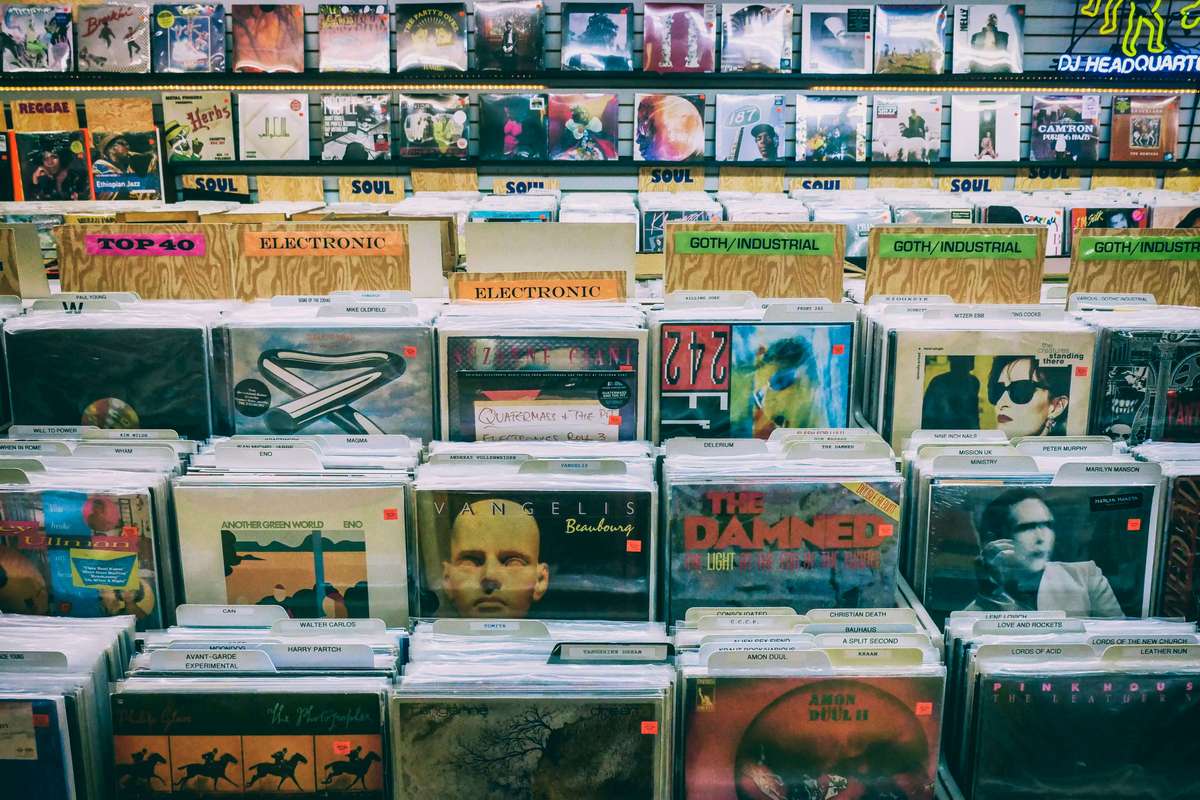
I have music sitting on my shelves that I could probably hear within ten seconds without getting out of my chair.
Some of it is rare. Some of it isn't remotely rare. Some of it could probably be replaced tomorrow for five bucks.
And some of it I wouldn't replace for anything.
There's a record I bought in New York in 1996. I remember the trip. I remember finding it. That particular copy has somehow followed me through three decades of life.
There's an EDM classic I picked up in a shop in London. I can stream the music now. That's convenient. But the stream doesn't remember London.
The CD does.
Or at least I do when I hold it.
That's the thing about collecting physical music that is difficult to explain if we reduce everything to the question, "Can I listen to this song?"
Of course I can.
I can listen to almost anything.
That's not the same question anymore.
The better question is why, when I already carry a ridiculous amount of recorded music around in my pocket, I still find myself flipping through records in Wicker Park, poking around shops in Yellow Springs, Ohio, scanning CD racks at Goodwill, stopping at garage sales, and coming home with more stuff that requires shelving.
And then, eventually, more shelving.
The answer isn't that streaming failed.
Streaming solved a different problem.
It gave me access.
I still want a collection.
Streaming Is Fantastic
I want to get this out of the way before anyone starts building barricades out of old jewel cases.
I think streaming is great.
Really.
I use it constantly.
Streaming may be the best music-discovery tool we've ever had. I hear an artist I've never encountered, tap a name, and five seconds later I'm listening to an album that once might have required a recommendation, a magazine review, a radio DJ, a trip to a store, and a $17 gamble.
Now I can just listen.
That's astonishing.
It is also perfect for answering one of the most practical questions a collector can ask:
Do I like this enough to give it shelf space?
Physical music costs money. It occupies actual cubic footage in my house. I am extremely grateful that I can sample something before deciding it deserves either.
Streaming is also unbeatable at parties.
Nobody needs me hovering next to a turntable every 22 minutes saying, "Hang on, side two."
People are talking. Someone wants Prince. Someone else wants hip-hop. Someone wants dance music. Someone who has apparently been waiting all night for exactly the wrong moment suddenly wants country.
Fine.
Streaming wins.
The same goes for long road trips. Put several people in a car for six hours and you discover remarkably quickly that the phrase "we all like music" contains very little useful information.
Build a shared playlist. Throw in classic rock, punk, dance music, hip-hop, pop, country, whatever strange thing one passenger insists is perfect highway music, and keep moving.
Streaming is basically the greatest mixtape technology ever invented.
I mean that as a compliment.
I think of streaming a little like the radio I grew up with, except the station contains almost everything, takes requests instantly, doesn't lose signal outside town, and occasionally knows what I want to hear before I do.
That's one hell of a radio.
But I don't confuse the radio with my collection.
I Don't Actually Own My Streaming Library
This isn't philosophical. It's contractual.
Spotify's current U.S. terms describe the service as giving listeners limited, non-exclusive, revocable permission to access the service and its content. Spotify explicitly says the content is licensed rather than sold to users, and its terms say Spotify or content owners may remove particular songs or other material.
That isn't some scandal hidden in twelve miles of legal copy. It is simply how subscription streaming works.
I pay for access.
When I buy a CD, record, cassette, or box set, I own that particular physical copy.
I don't own the copyright. I haven't suddenly acquired the right to press 10,000 copies and start my own extremely short-lived record label.
But that disc on my shelf is mine.
If a label changes distributors, I still have it.
If rights negotiations fall apart, I still have it.
If an artist decides to leave a platform, I still have it.
If a streaming service rearranges its catalog, I still have it.
And catalog changes aren't hypothetical. Spotify's own support documentation says its catalog varies over time and by country depending on permissions from rightsholders. Its documentation for artists also describes releases being removed after takedown requests or changes to rights availability.
Apple gives similar guidance. Its March 2026 support documentation specifically tells users what to do when a song that had been available in Apple Music has been removed from the catalog and suggests finding an alternative version.
Most of the music most of us want to hear isn't vanishing every Tuesday.
There is no reason for panic.
The point is simply that access is conditional in a way a copy sitting on my shelf is not.
Sometimes the Version Matters
Streaming tends to make us think in terms of the album.
Collecting eventually teaches you to think about the release.
Those aren't always the same thing.
An album may exist as an original release, later remaster, expanded edition, anniversary edition, regional issue, deluxe package, alternate mix, bonus-track version, censored version, uncensored version, or some combination cooked up by a label department that clearly has access to a spreadsheet and no adult supervision.
None of that automatically makes one version better.
Old doesn't mean better.
Remastered doesn't mean worse.
Collectors can turn mastering debates into a contact sport, and I am not interested in requiring a blood test before anyone is allowed to enjoy an album.
What matters to me is knowing what I have.
If I own a particular CD, I know which version is on it.
That disc isn't going to silently become the 2029 anniversary remaster while I'm sleeping.
Streaming services deal with releases as supplied and updated by labels and distributors. Spotify's own documentation explains that metadata comes from those providers and may be updated or even re-uploaded; it also has a track-linking process for connecting re-uploaded recordings with existing play counts.
Again, this isn't evidence of some plot to replace your favorite snare sound.
It's simply a difference.
A physical copy freezes a release.
For some music, I care about that.
The Economics Are Messier Than "Half a Cent Per Stream"
This is the part of the streaming conversation where everybody starts throwing around fractions of pennies.
I would love to tell you the economics are as simple as, "I play a song and the musician gets X."
They aren't.
There are labels, publishers, distributors, songwriters, recording rightsholders, collecting societies, contracts, territories, royalty pools, and enough plumbing to make the average listener deeply regret asking where their subscription money went.
Spotify says plainly that it does not pay artists according to a universal fixed per-stream rate. It calculates rightsholder payments largely through streamshare: the proportion of streams attributed to music controlled by particular rightsholders within a given market and period. Payments go to recording and publishing rightsholders, after which what reaches individual artists or songwriters depends on their own agreements.
That distinction matters.
"Spotify pays an artist exactly $0.003 every time I play a song" makes for a wonderfully shareable graphic.
It just isn't how the system works.
Spotify also has a legitimate economic case to make. The company says it paid more than $11 billion to music rightsholders in 2025, and that rightsholders receive roughly two-thirds of the music revenue Spotify generates.
Zoom out further and streaming is obviously not some economic sideshow.
IFPI reported that global recorded-music revenue reached $31.7 billion in 2025, with streaming generating more than $22 billion and accounting for 69.6% of worldwide recorded-music revenue. Paid streaming subscriptions alone accounted for more than half of global recorded-music revenue.
In the United States, the RIAA reported $9.5 billion in streaming revenue for 2025, representing 82% of U.S. recorded-music revenue.
Streaming generates enormous amounts of money for the music business.
That fact can coexist perfectly well with another one:
A lot of musicians remain unhappy with what reaches them.
Artist economics vary wildly depending on contracts, ownership, audience, career stage, publishing rights, geography, and about 48 other variables.
The UK's Musicians' Union has been particularly critical of streaming compensation, including the fact that non-featured session musicians generally do not receive ongoing streaming royalties from recordings in the same way they can receive certain performance royalties elsewhere.
Artists aren't a monolith, either.
Some build enormous audiences through streaming.
Some depend on it.
Some hate aspects of it.
Some leave platforms.
Most probably hold several opinions simultaneously, which is usually what happens when reality gets involved.
Some Artists Have Decided They're Done With It
In 2025, several artists announced they were removing music from Spotify after then-CEO Daniel Ek's investment firm, Prima Materia, led a €600 million funding round in Helsing, a European defense-technology company working with AI and military systems.
Deerhoof was unusually direct about its decision.
"We don't want our success being tied to AI battle tech," the band wrote when announcing its Spotify departure. But their statement also included an important caveat: Deerhoof said leaving was relatively easy for them because they earned more from touring, while acknowledging that other artists and labels depend more heavily on Spotify and shouldn't be judged for staying.
That's exactly the kind of nuance that tends to get pulverized online.
King Gizzard & the Lizard Wizard and Xiu Xiu also announced plans to remove their music over Ek's Helsing involvement.
Other artists have objected to streaming platforms for other reasons at other times.
The point isn't that musicians are all abandoning Spotify.
They aren't.
The point isn't that you should abandon it.
I'm not telling you what app to use.
The point is that the music available through any service exists inside relationships among artists, labels, distributors, publishers, rightsholders, and platforms.
Those relationships can change.
My CD doesn't care.
Streaming Is Where I Discover Music. Physical Is Where Some of It Ends Up.
This is why I've never understood the need to turn streaming and collecting into rival football teams.
Streaming frequently causes me to buy physical music.
I hear an artist.
I dig into the catalog.
I play an album a few times.
Something clicks.
Then I think, Yeah. I want that.
Sometimes I buy the record.
Sometimes the CD.
Sometimes a cassette.
Sometimes whatever strange edition the artist has decided to sell because apparently musicians and collectors share an inability to leave well enough alone.
Streaming is part of the funnel.
It makes taking chances easier.
And physical collecting doesn't require me to own everything I enjoy.
Thank God.
My streaming library can contain thousands upon thousands of things I might want to hear.
My physical collection contains music I decided to acquire.
Those are different relationships.
Streaming answers:
What can I listen to right now?
Collecting answers:
What music have I decided belongs in my life?
That's the distinction I keep coming back to.
My Collection Is Basically a Badly Organized Autobiography
I can look at shelves of physical music and see something completely different from an alphabetical list.
I see places.
Periods.
People.
Accidents.
Trips.
That record from New York in 1996 isn't meaningful to me primarily because it is a rarity.
Its scarcity is interesting.
Its story matters more.
The same goes for that EDM CD from London. The tracks aren't trapped inside the object. They can exist elsewhere.
But that copy came home from London with me.
I have music from digging through shops in Wicker Park in Chicago.
I have discoveries connected with Yellow Springs, Ohio.
I've pulled countless records and CDs out of garage sales, Goodwill racks, secondhand stores, and bins where somebody else's carefully accumulated music collection was apparently priced by a person using darts.
Sometimes I've known exactly what I was looking for.
Often I haven't.
That provenance accumulates.
An object becomes attached to where I found it, who I was with, what phase of life I was in, or how completely ridiculous the circumstances of buying it were.
A stream contains the recording.
A particular physical copy can carry a story.
You Can't Algorithmically Recreate a Garage Sale
Streaming discovery is astonishingly efficient.
Physical discovery is often hilariously inefficient.
That can be part of the fun.
I can type an artist's name into a streaming app and hear exactly what I requested.
At a garage sale, I'm stuck with whatever is sitting in three milk crates next to a broken toaster and a lamp nobody has wanted since 1987.
Those limitations create different choices.
Maybe I recognize one song title.
Maybe the cover looks interesting.
Maybe I vaguely remember the artist's name.
Maybe it's two dollars and that's low enough to make me reckless.
Maybe somebody behind the counter in a record store says, "If you like that, try this."
Sometimes the recommendation is fantastic.
Sometimes I get home and discover why the previous owner was comfortable accepting two dollars.
That's fine.
Algorithms are remarkably good at identifying relationships between music I already enjoy.
Humans can be good at something slightly different: making a recommendation because they know the records, know me, or simply have a weird hunch.
I want both.
There is a difference between searching for something and finding something.
Collecting leaves more room for the second one.
Album Art Wasn't Designed to Be 46 Pixels Wide
I love that streaming services make cover art visible.
I also enjoy occasionally seeing the rest of it.
Records get most of the attention here because twelve-inch artwork is hard to ignore, but physical music isn't a synonym for vinyl.
CD booklets are great.
So are cassette J-cards.
Box sets can contain books, essays, photographs, archival material, session information, reproductions, alternate artwork, and enough cardboard engineering to make opening the package feel like assembling patio furniture.
Packaging gives an album room.
There are lyrics.
Photography.
Production notes.
Credits.
Illustrations.
Label designs.
Things hidden under trays.
Liner notes written by people who actually know what they're talking about.
And credits matter.
Who produced this?
Who engineered it?
Who played bass?
Who sang background vocals?
Who took the photographs?
Who mastered the record?
Who designed the package?
Streaming has improved significantly here. Spotify says it displays credits supplied by labels and distributors, including producers, engineers, songwriters, and featured artists. Apple Music likewise provides production, engineering, performer, and other credits when that information is available.
That's good.
Physical releases just happen to make those details part of the thing I bought.
Sometimes I still enjoy reading them without opening another menu.
I Like Giving Musicians Money for Music
Supporting artists is another reason I buy physical releases, but I don't want to turn this into charity.
I'm not buying an album because I believe a musician requires my benevolent rescue.
They made something.
I want it.
I buy it.
That seems like a healthy transaction.
How much of a physical sale reaches an artist varies enormously.
There may be manufacturing costs, retailers, distributors, labels, managers, publishers, and contractual arrangements involved.
Buying a $30 LP at a chain store does not magically teleport $30 into the drummer's checking account.
But direct-to-fan purchasing can create a much more visible connection.
Bandcamp, for example, says an average of about 82% of money from purchases on its platform goes to the artist or label after Bandcamp's revenue share and payment processing. Its stated revenue share is 10% on physical merchandise and 15% on digital music before processing fees.
Buying directly from an artist at a show or through an artist's own store may offer another way to support them, although the economics again depend on fulfillment, manufacturing, venue arrangements, contracts, and who actually owns the inventory.
There is no universal equation.
But if I really love someone's work, buying an album or a shirt feels more intentional than contributing one more play to a royalty pool.
I was going to buy the music anyway.
The support is a benefit.
Cheap Music Counts Too
Collecting occasionally develops a weird tendency to confuse price with significance.
Limited edition.
Numbered pressing.
Colored variant.
Import.
Rare.
Out of print.
Fine.
Those things can be fun.
But some of the best purchases I've ever made have come from inexpensive bins.
A $2 CD at Goodwill counts.
A garage-sale record counts.
A cassette you picked up because you wanted the music counts.
Physical collecting doesn't need to become investment management with better album covers.
The RIAA's 2025 numbers are useful here because they show how broad the physical market still is: Americans bought 46.8 million vinyl albums and 29.5 million CDs that year. Globally, IFPI reported that physical music revenue grew 8% in 2025, including growth in both vinyl and CDs.
People are buying this stuff.
Not all of them are chasing collectibles.
Sometimes you just want an album.
Physical Music Makes Me Choose
Streaming removes friction.
Usually that is fantastic.
Physical media puts a tiny amount back.
I have to pick something.
Take it off the shelf.
Put it on.
Maybe turn the record over.
Maybe change the CD.
Maybe flip the cassette.
I'm not going to tell you this transforms listening into a sacred ritual that aligns your chakras with the mastering engineer.
It's an album.
Calm down.
But making a choice does affect how I listen.
When almost everything is available instantly, it is wonderfully easy to jump from one thing to another.
Sometimes I do.
Physical media creates a small commitment.
I've already pulled this thing off the shelf.
Might as well hear where side two goes.
That has kept me with albums long enough to discover songs I might have skipped after 20 seconds on a screen.
Not because physical music forces me to "listen properly."
There is no music police.
It just changes the behavior a little.
I like that sometimes.
The Collection Is Sitting Right There
Physical music is also visible.
I walk past it.
I browse it.
I notice something I haven't played in years.
A friend can scan the shelves and pull something out.
"You have this?"
Yep.
Apparently I do.
Sometimes I'm the one who has that reaction.
Which is embarrassing because I bought it.
This is one area where streaming software absolutely humiliates the humble shelf.
Shelves are terrible databases.
They have no search box.
Filtering by genre requires a degree of organizational commitment I do not possess.
And once a collection gets large enough, you eventually stand in a store holding an album and asking yourself the humiliating collector question:
Do I already own this?
That mundane problem is a big part of why we built RecordRoom: a fast way to keep track of records, CDs, cassettes, box sets, and the rest without turning collection management into forensic accounting.
Because apparently acquiring hundreds of albums is easier than remembering which hundreds of albums you acquired.
Yes, Owning Music Is Inconvenient
Collections cost money.
They take space.
Records need care.
CD jewel cases possess a mysterious ability to crack while sitting perfectly still.
Cassettes have their own charming collection of mechanical personality disorders.
Everything collects dust.
Shelving is never finished.
And moving a large music collection is a deeply educational experience in physics.
A box of records has approximately the density of a collapsed star.
You learn this on the first staircase.
There is no reasonable argument that physical music is more convenient than streaming.
It isn't.
That's why streaming won convenience.
But convenience is not the only thing I value.
I also like permanence.
I like the artwork.
I like knowing which release I have.
I like walking into a shop with no plan.
I like bringing something home from a trip.
I like inexpensive discoveries.
I like weird editions.
I like handing money to record stores I want to continue existing.
I like buying directly from artists.
Most of all, I like having a collection that became mine one decision at a time.
Streaming Gives Me a Library. Collecting Gives Me a Collection.
The remarkable thing about streaming is how little I have to choose permanently.
Nearly everything is waiting.
I can wander.
Explore.
Sample.
Build playlists.
Follow recommendations.
Hear something once and move on.
That freedom changed music listening for the better.
But my collection works differently.
Every object got there somehow.
I bought it when it came out.
Or discovered it 20 years later.
Someone recommended it.
Someone gave it to me.
I found it while traveling.
I rescued it from a bargain bin.
The cover caught my attention.
I spent too much.
I spent almost nothing.
I couldn't believe I found it.
Sometimes I can't believe I bought it.
Together, those choices tell a story that my streaming history doesn't.
I can pull out that New York record from 1996.
I can find the EDM record from London.
I can see things discovered in Chicago, Ohio, garage sales, shops, and Goodwill racks.
The music on many of them can be streaming through my speakers before I even finish typing the title.
That's wonderful.
It's also beside the point.
I don't buy physical music because streaming failed.
I buy physical music because streaming solved a different problem.
Streaming lets me hear almost anything.
My collection tells me what I decided to keep.
Sources & Further Reading
- Spotify — Terms of Use
- Spotify for Artists — Understanding Spotify Royalties
- Spotify Loud & Clear
- IFPI Global Music Report
- RIAA — U.S. Recorded Music Revenue Reports
- Spotify — Missing Music or Podcasts
- Apple — If Songs Are Missing From Your Music Library
- Spotify for Artists — Song Credits
- Bandcamp — About
- Musicians' Union — Fix Streaming
- Deerhoof — Bye Spotify
- The FADER — King Gizzard Spotify Boycott
Photo by Mick Haupt on Unsplash